Trail gear / Adequate before compact
Carry the Trail Basics
A small kit is useful only if it addresses the conditions. Plan the route, understand the consequences and carry equipment you know how to use.
General planning information, not a route assessment, medical instruction or substitute for outdoor training. Check local land-manager advice, current conditions and your own experience before setting out.
Start with the route and its consequences
Distance is only one part of a walk. Elevation gain, rough ground, exposure, daylight, river crossings and distance from help can change the demands considerably. A popular trail is not automatically a low-consequence trail. Look at the forecast for the route’s elevation, identify sensible turnaround points and check closures or access restrictions before leaving.
The National Park Service’s Ten Essentials guidance is a useful planning framework, not a promise that one fixed list covers every outing. Conditions on the Appalachian Trail, in Snowdonia or around Yosemite National Park differ, and each has local considerations. Use current local guidance rather than transferring an internet packing list unchanged.
Make navigation independent of reception
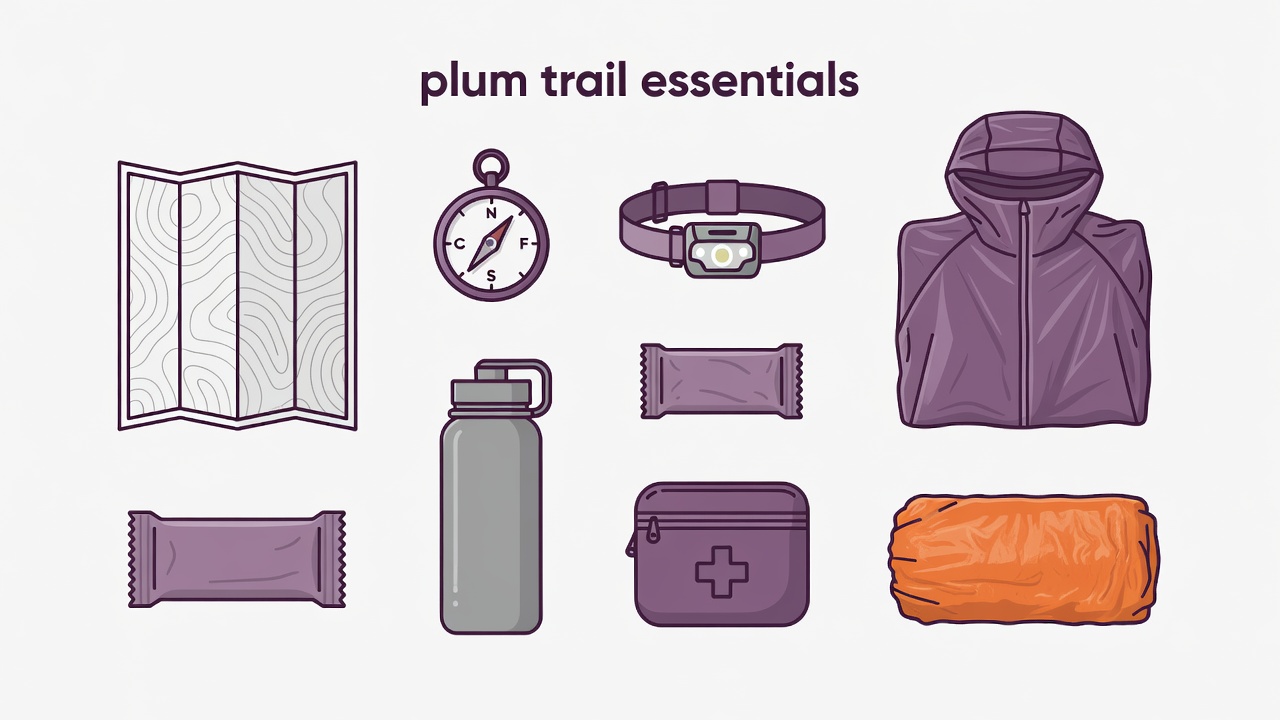
Download the appropriate map before departure and confirm that it is available offline. Know how to interpret it, and keep the device protected and charged. A phone’s navigation function may work without mobile reception, but messaging, map downloads and some app features may not. Battery life can also change with temperature and usage.
A paper map and compass provide a different failure mode, but only if you know how to use them. Ordnance Survey mapping and local land-manager maps can support planning where applicable. Choose information appropriate to the area and scale of travel. Practice navigation on familiar ground rather than relying on unfamiliar equipment for the first time in poor visibility.
Plan water and food explicitly
Work out where safe water will come from and whether those sources are reliable in current conditions. Water needs vary with heat, exertion, duration and the individual, so a single universal quantity is not appropriate. Carry enough capacity for the planned gaps and a reasonable contingency. A clear stream is not proof of safe drinking water.
Filters, chemical treatments and purifiers do not all address the same hazards. Follow the specific product instructions, including maintenance, contact times and any freezing limitations. Sawyer and Katadyn are examples of manufacturers with model-specific instructions worth reading; a brand name alone does not establish suitability. Bring food you can eat comfortably and allow for an unexpected extension to the day.
Protect against weather and waiting
Choose clothing for both movement and an unplanned stop. A layer that feels excessive while climbing may matter when you are stationary. Wind, rain and cold can combine even when the temperature seems moderate. Keep critical insulation protected from moisture, and consider suitable sun protection in exposed conditions.
For overnight equipment, understand what the stated rating measures. The ISO 23537 standard concerns sleeping-bag temperature ratings under specified test conditions; it does not guarantee a particular person’s comfort. Shelter, sleeping mat, clothing, fatigue and individual factors also matter. Do not select an overnight system from a single headline number without understanding the full setup.
Reduce duplicated conveniences before reducing the margin that keeps an ordinary delay manageable.
Carry light and response tools you can use
A headlamp leaves your hands free and provides a separate light source from your phone. Check its operation and power supply before leaving. First-aid supplies should reflect the activity, personal needs and your training. Keep prescribed medication accessible and consider a small repair kit targeted at the equipment actually carried. Extra tools are not a substitute for knowing how to use them safely.
Leave your route, expected return and an agreed response plan with a trusted person. Mobile coverage may be absent. Satellite communicators can add an option where appropriate, but they have service, power, subscription and operating limitations. Understand those before relying on one. Equipment does not remove the need to turn back when conditions exceed the plan.
Keep the footprint small, too
Follow local rules for camping, waste, food storage and fire. The Leave No Trace principles offer a useful starting point, while local regulations take precedence. A compact stove is not permission to use it during a restriction. Check fuel compatibility and transport restrictions, and never operate a stove in an enclosed sleeping space because of fire and carbon monoxide hazards.
On return, dry shelter and clothing fully, inspect water-treatment equipment according to its instructions, replenish consumables and note any planning gaps. The most useful upgrade may be better route judgment or navigation practice rather than another gadget.