Packing lists / Start with conditions
Build Your Trip Loadout
A useful list describes your trip—not every trip you might take. Work from the conditions inward, then remove duplication carefully.
Write a trip brief first
Before opening a cupboard, write down your destination, nights away, transport, accommodation and planned activities. Add the expected temperature range, likely rain, laundry access and how easily you can replace a forgotten item. A weekend in Edinburgh with indoor accommodation asks different questions from a self-supported walk in the Lake District. The point is not to anticipate every inconvenience. It is to identify the conditions that would make a missing item genuinely consequential.
Check forecasts close to departure, but do not treat a forecast as a guarantee. If you will be outdoors, consider exposure, altitude and the consequences of a delay. Personal medication, accessibility needs, local rules and essential documents belong in the brief from the beginning.
Separate the load into three groups
Use “essential,” “condition-dependent” and “convenience.” Essential items cover the trip’s non-negotiable needs. Condition-dependent items earn their place through the weather, activity or destination. Conveniences are allowed, but should be named honestly. A second charging cable may be sensible redundancy for an essential device on a remote journey; three similar casual tops may simply be three versions of the same function.
Keep the categories specific. “Warm layer for an unheated evening stop” is more useful than “extra clothing.” Do not remove prescribed supplies or safety equipment merely because you did not need them on your previous outing.
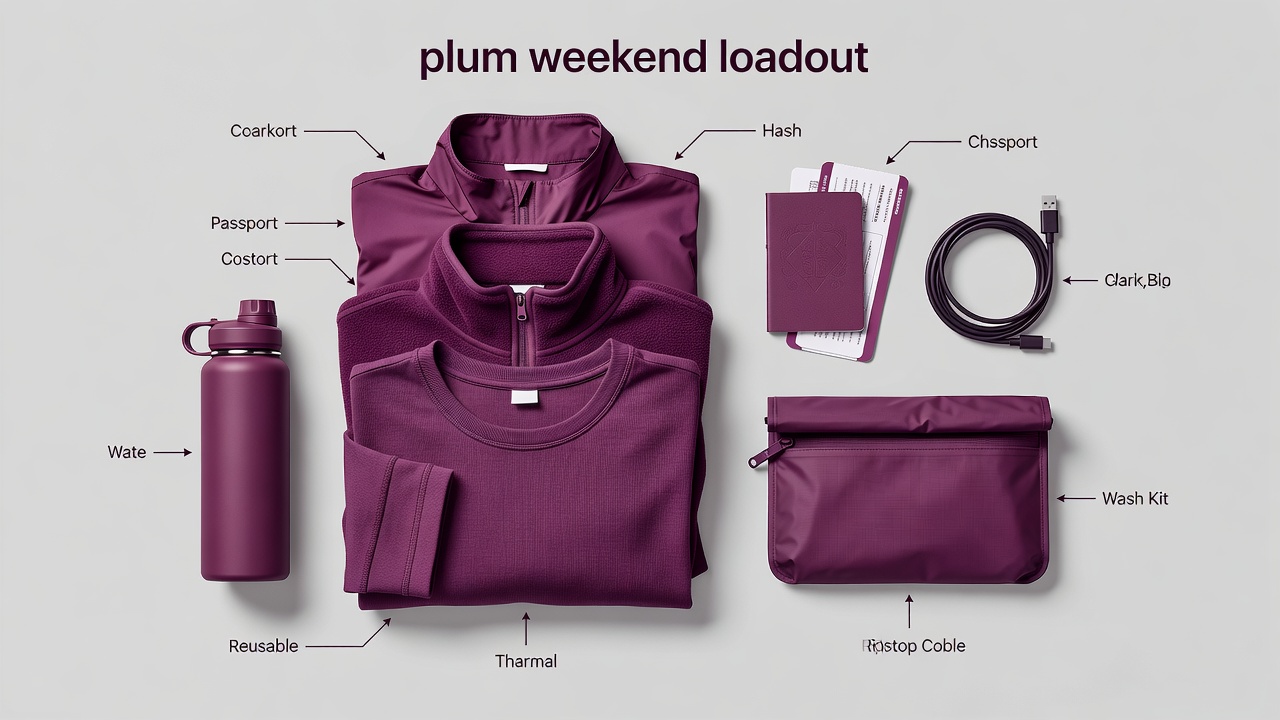
Plan clothing around a repeatable system
Choose pieces that work together and suit the activity. Count underwear and socks against realistic washing and drying opportunities. If you expect to hand-wash clothing, consider humidity, accommodation rules and whether anything will dry overnight. A sink is not automatically a workable laundry plan. Keep one suitable change accessible when an arrival is likely to be late or your main bag may be checked.
Footwear deserves particular scrutiny because it occupies space even when it weighs little on paper. Start with the pair appropriate to your main activity. Add another only for a distinct need, such as required work clothing or shared washing facilities. Wear unfamiliar footwear before departure rather than discovering pressure points on a long walking day.
A packing list is a set of decisions, not a shopping list.
Your printable core checklist
Tick what you need, add destination-specific requirements on the printed copy and cross out irrelevant lines. These checkboxes are temporary browser controls, not a saved account or an automatically complete safety checklist.
Check transport restrictions directly
Measure the packed bag, including protruding pockets, and weigh it if your carrier specifies a weight limit. Cabin rules vary by airline, fare and route. Do not assume that a bag marketed as cabin-sized will be accepted everywhere. Check battery, liquid, sharp-item and stove-fuel rules with the relevant carrier and security authority. The Transportation Security Administration’s item search is useful for journeys through United States checkpoints; it does not replace another country’s requirements.
Do one full packing rehearsal
Lay everything out, group it by function and pack the actual bag. Walk with the complete load and try retrieving documents, a layer and water without unpacking everything. If something is uncomfortable, first check fit and distribution, then revisit the items. A smaller bag cannot correct a poorly considered load by itself. Leave enough room to close zips without force and to manage food or clothing changes during the journey.
Make the next list better
After returning, note what was used, what was missing and what caused friction. Look at unused conveniences first. Keep a separate note for equipment carried for a credible emergency. Clean, dry and inspect the load before storage, and replenish consumables while the trip is still fresh in your mind. Over time, your own short record will be more useful than copying someone else’s elaborate inventory.
Next decision: find a bag that fits the load and your body →